


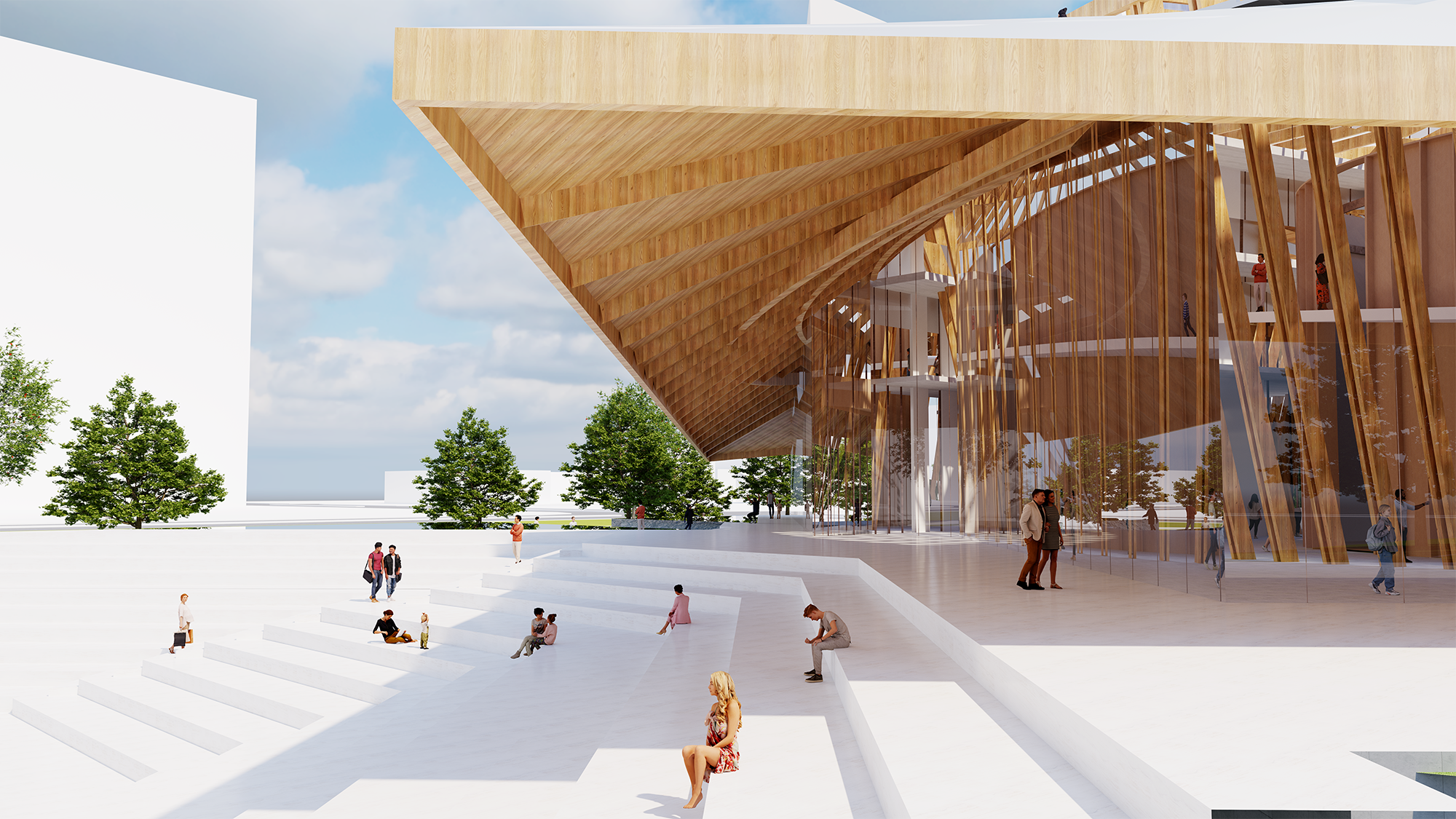
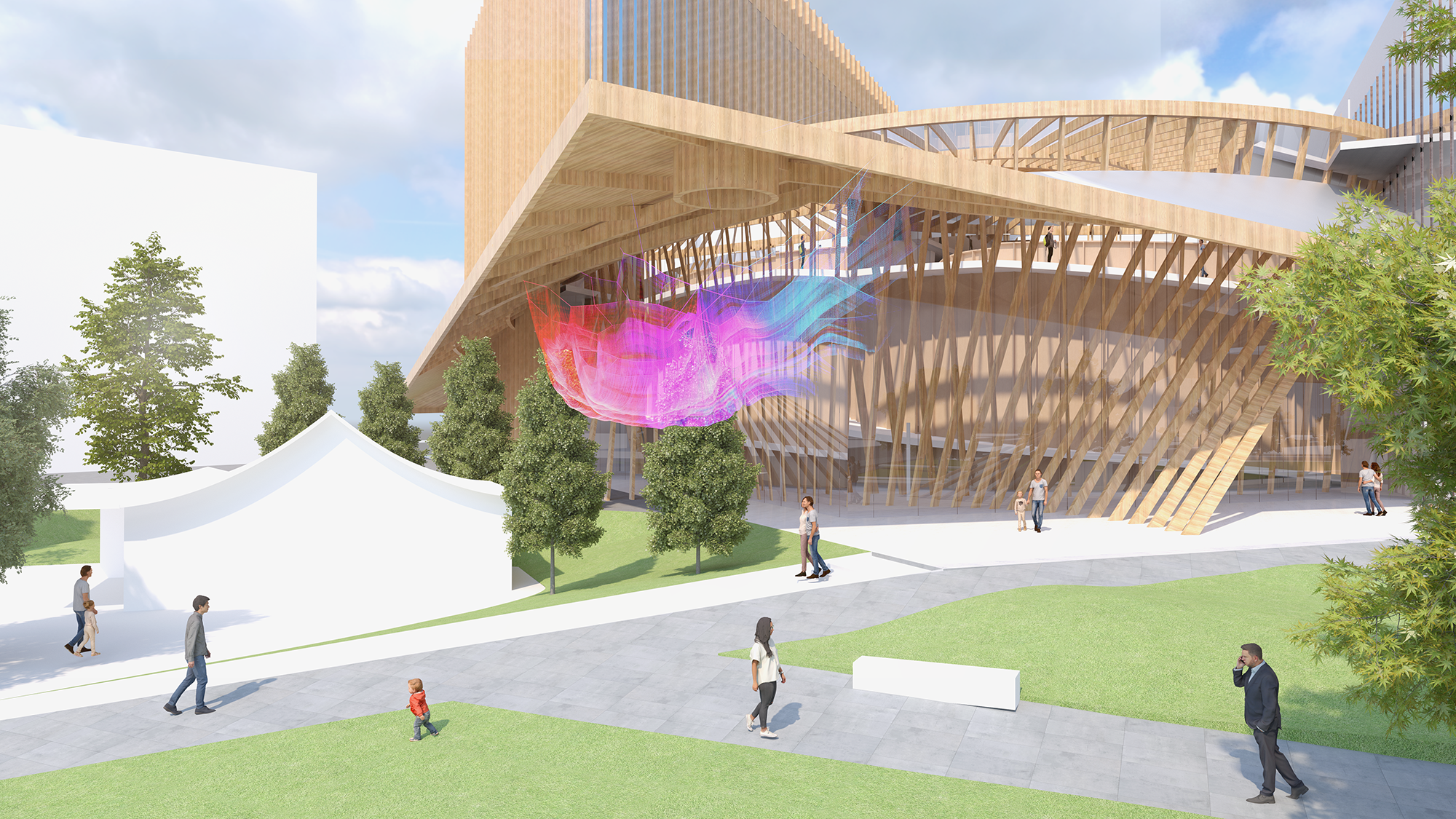
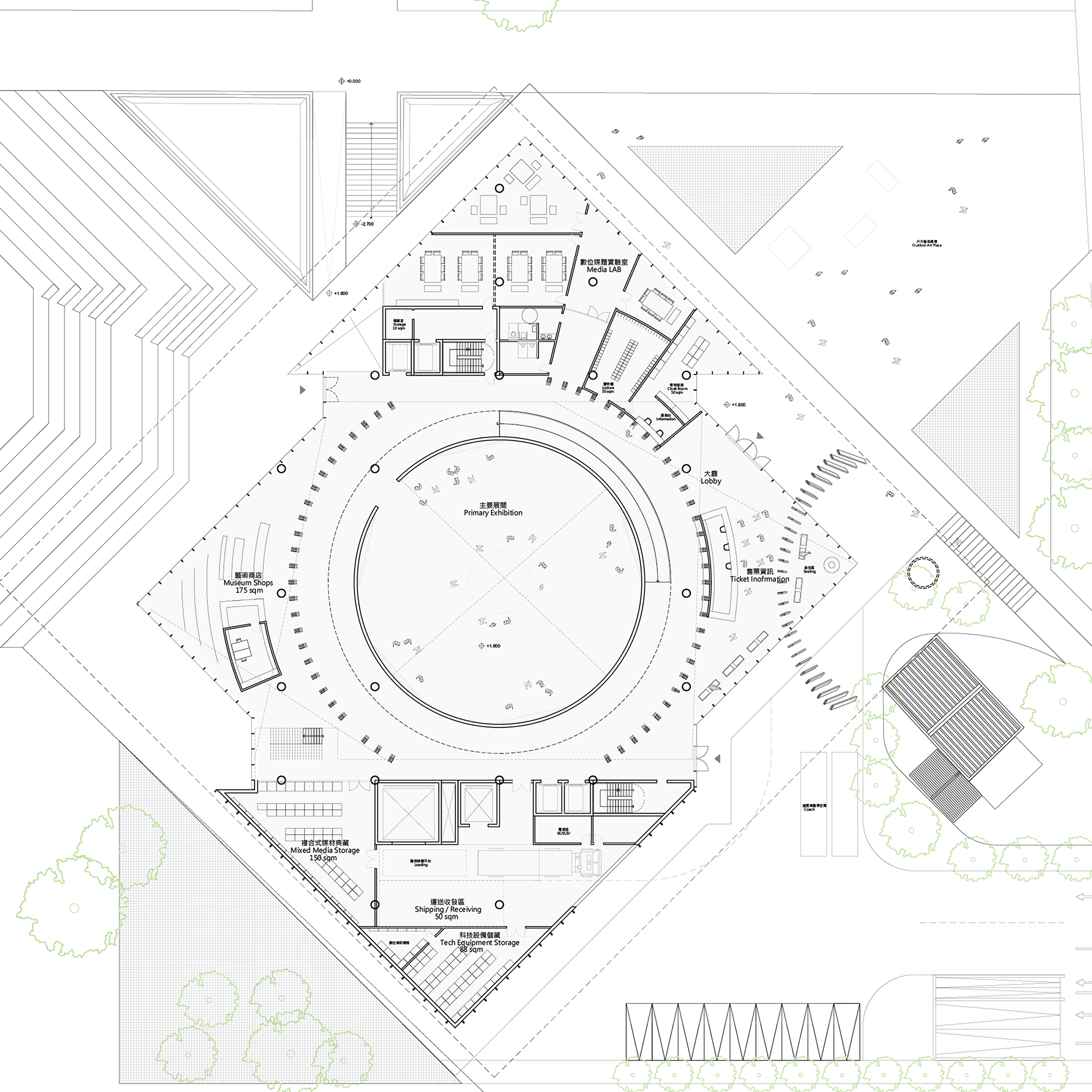
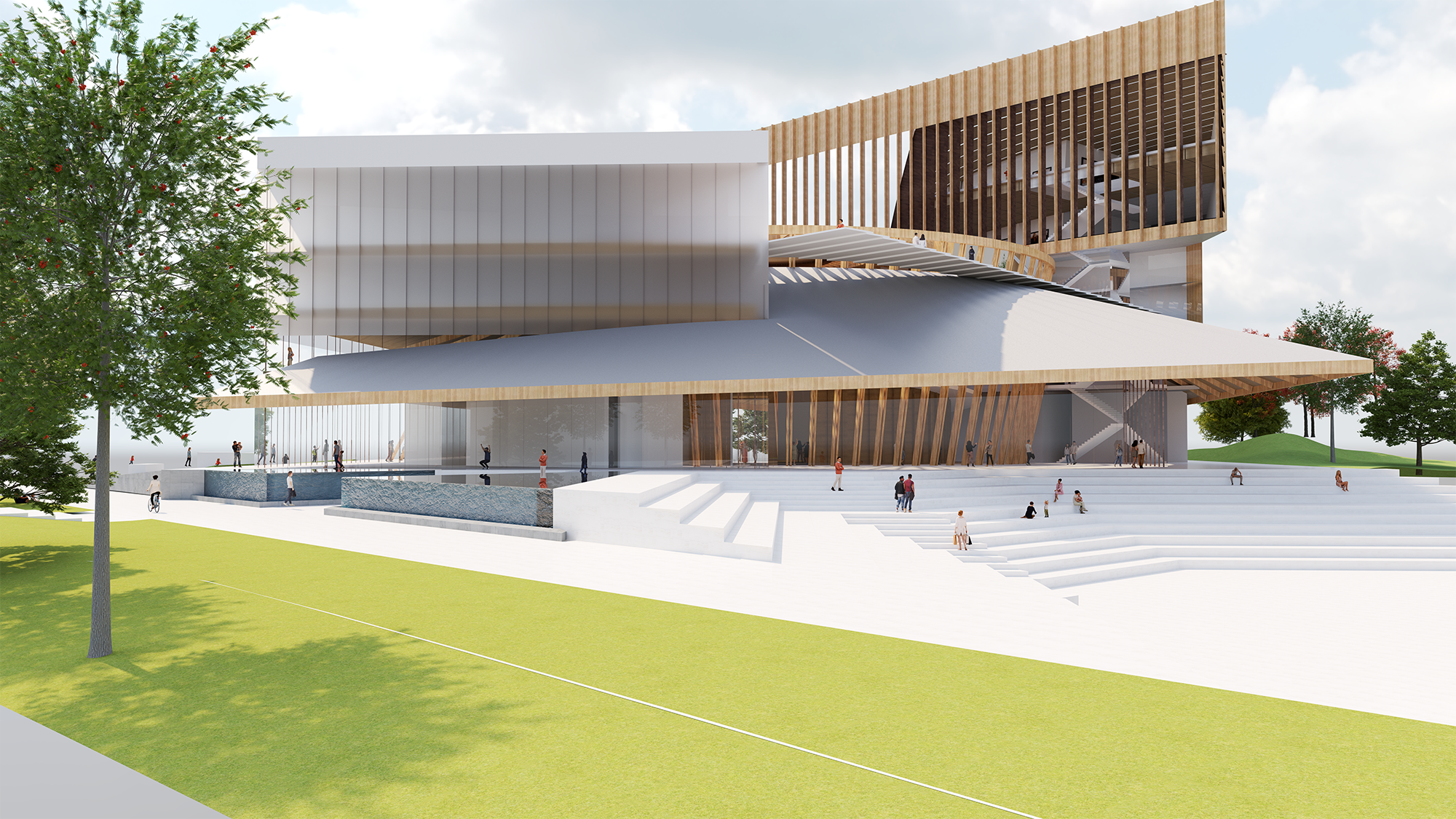
Situated between a historic temple and the Dongxing Canal, ‘Big Roof’ redefines the museum typology by dissolving the boundary between formal exhibition space and the public realm. The design establishes a visual axis that bridges the traditional cultural precinct with contemporary civic life, creating a dialogue between heritage and the future.
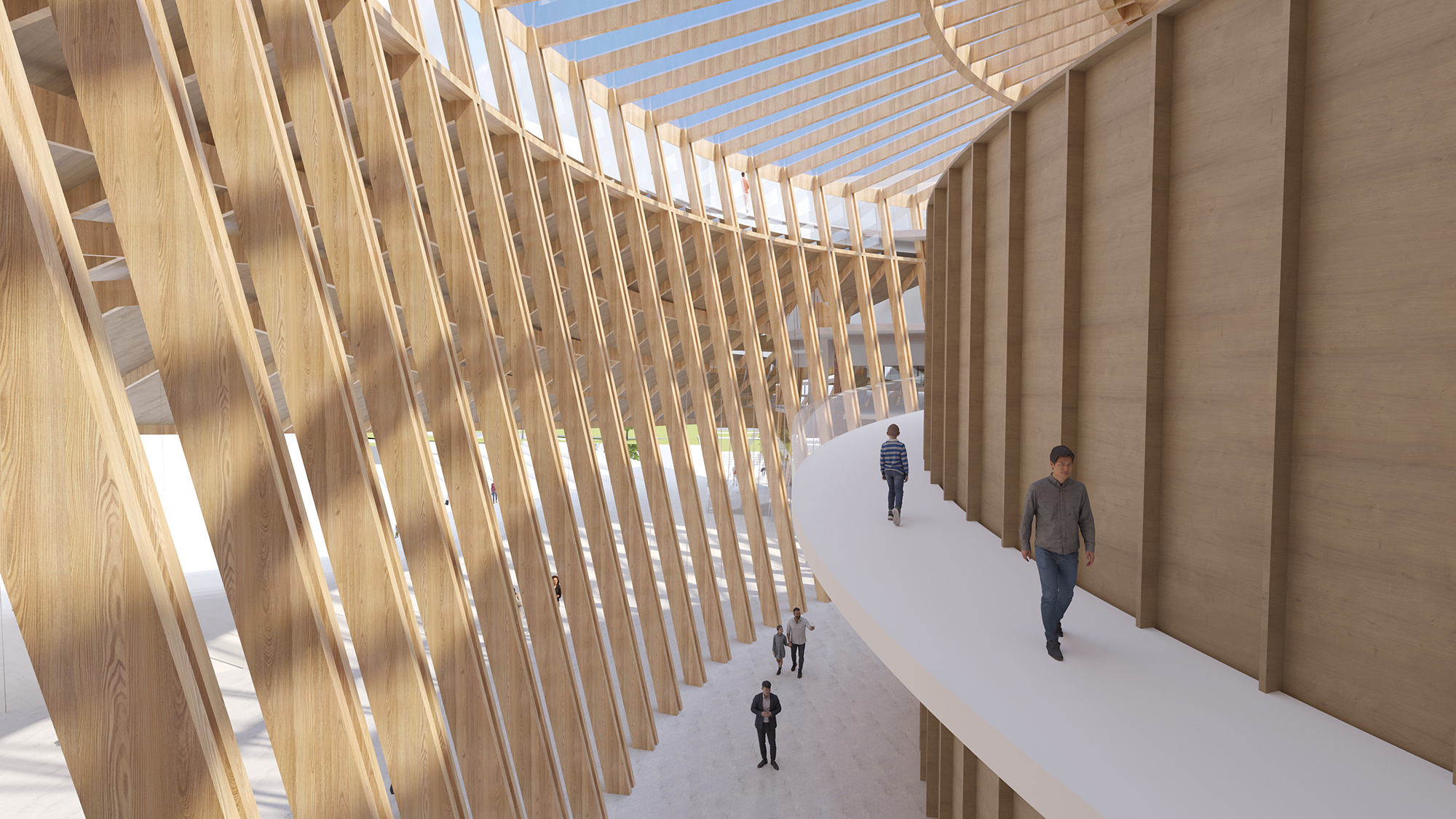
The project is defined by an expansive cantilevered timber roof, engineered to support public occupation while minimizing embodied carbon. By transforming the building envelope into an accessible, multi-layered terrain for large-scale installation art, the structure functions as an active civic venue. The structural geometry was meticulously calculated to accommodate significant load variations and seismic requirements inherent to the regional geography, ensuring the long-term resilience of the primary timber frame.
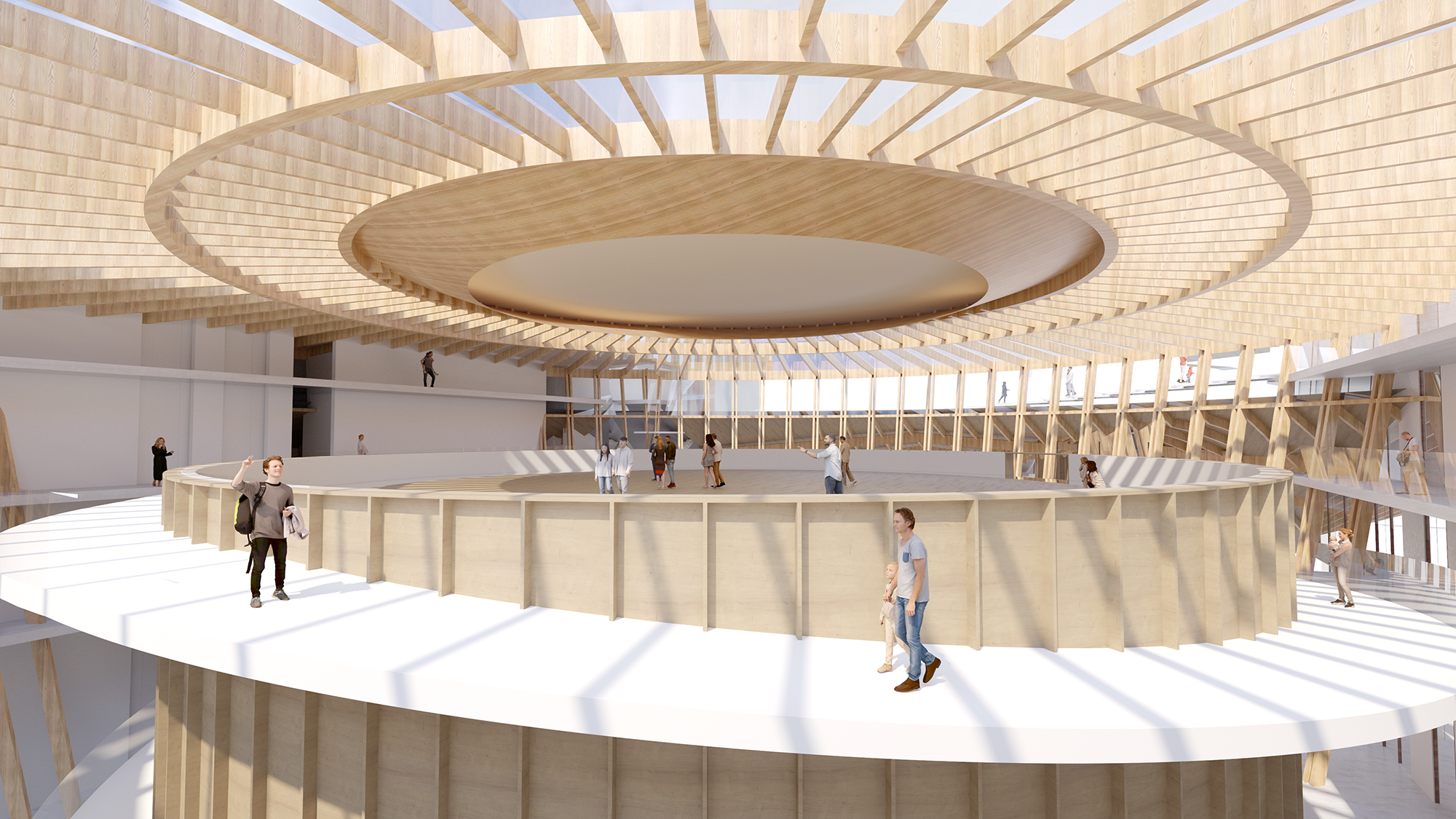
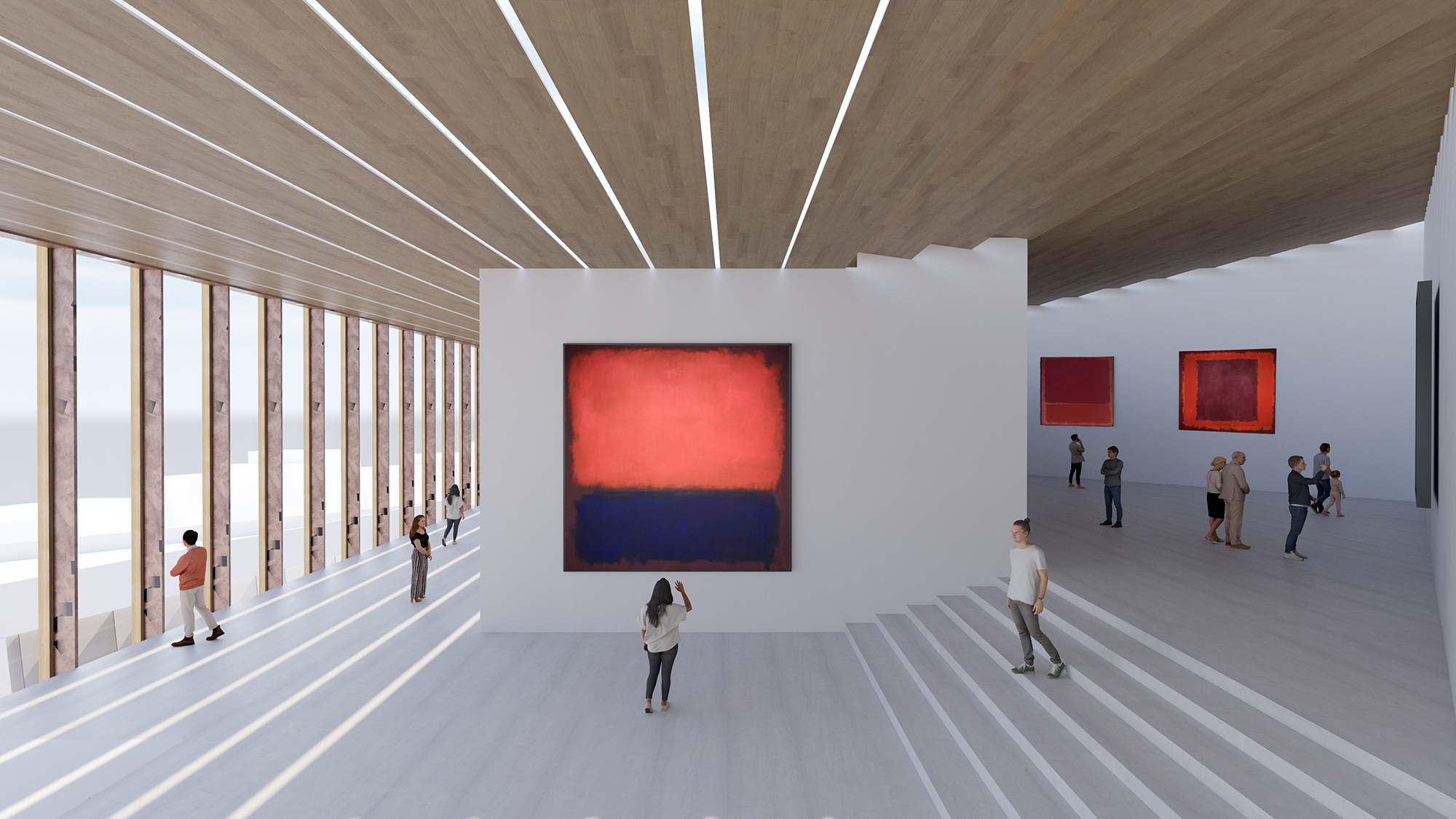
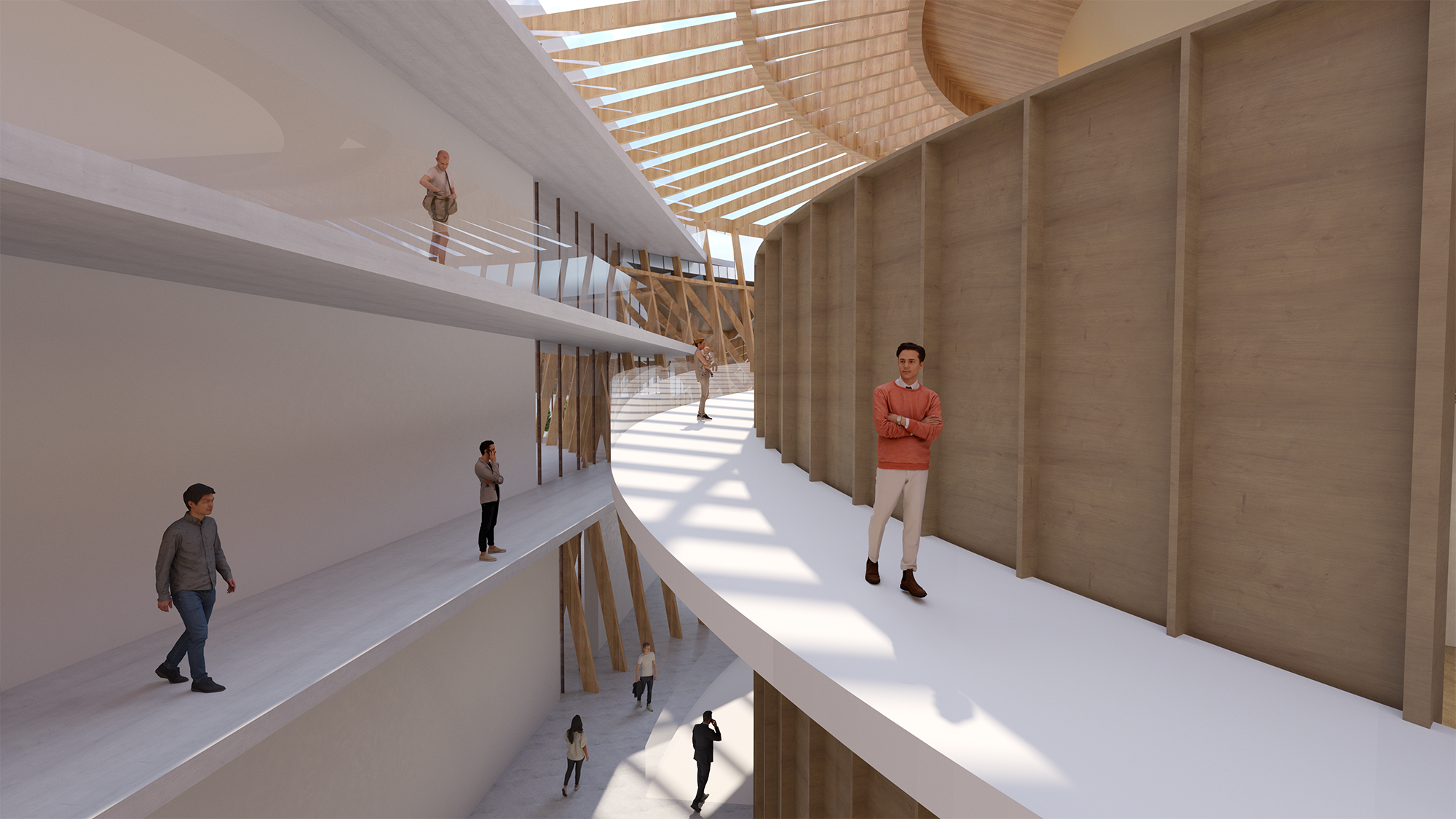
Internally, a spiral ramp facilitates fluid circulation, guiding visitors through a sequence of flexible galleries with varying ceiling heights (6m–10m). This spatial diversity allows the museum to accommodate diverse artistic mediums and evolving curatorial needs. The design prioritizes technical adaptability, ensuring the building remains functionally viable for future interdisciplinary scenarios.